

Introduction
Claiming personal expenses as business expenses is one of the most common yet underestimated compliance risks faced by business owners, professionals, and small enterprises. In most cases, this practice is not intentional tax evasion but arises from poor financial discipline, informal structures, or the misconception that expenses paid from a business account automatically qualify as business deductions.
While the short-term tax saving may appear insignificant, the long-term consequences can be severe. In an era of digitised, data-driven, and faceless tax assessments, such practices are increasingly detected and questioned by tax authorities.
What Qualifies as a Business Expense?
Under the Income Tax Act, only expenses incurred wholly and exclusively for the purposes of business or profession are allowable as deductions.
An expense must:
- Relate directly to business activity
- Be incurred during the relevant year
- Not be personal, capital, or prohibited in nature
The source of payment is irrelevant. Personal expenses do not become business expenses merely because they are paid from the business account or recorded in the books.
Why Personal Expenses Enter Business Accounts
Personal expenses commonly enter business books due to:
- Lack of accounting awareness
- Absence of structured bookkeeping
- Cash flow pressures
- Informal business setups
- Use of common bank accounts and assets
What begins as an occasional adjustment often turns into a recurring compliance risk.
Common Examples of Incorrect Claims
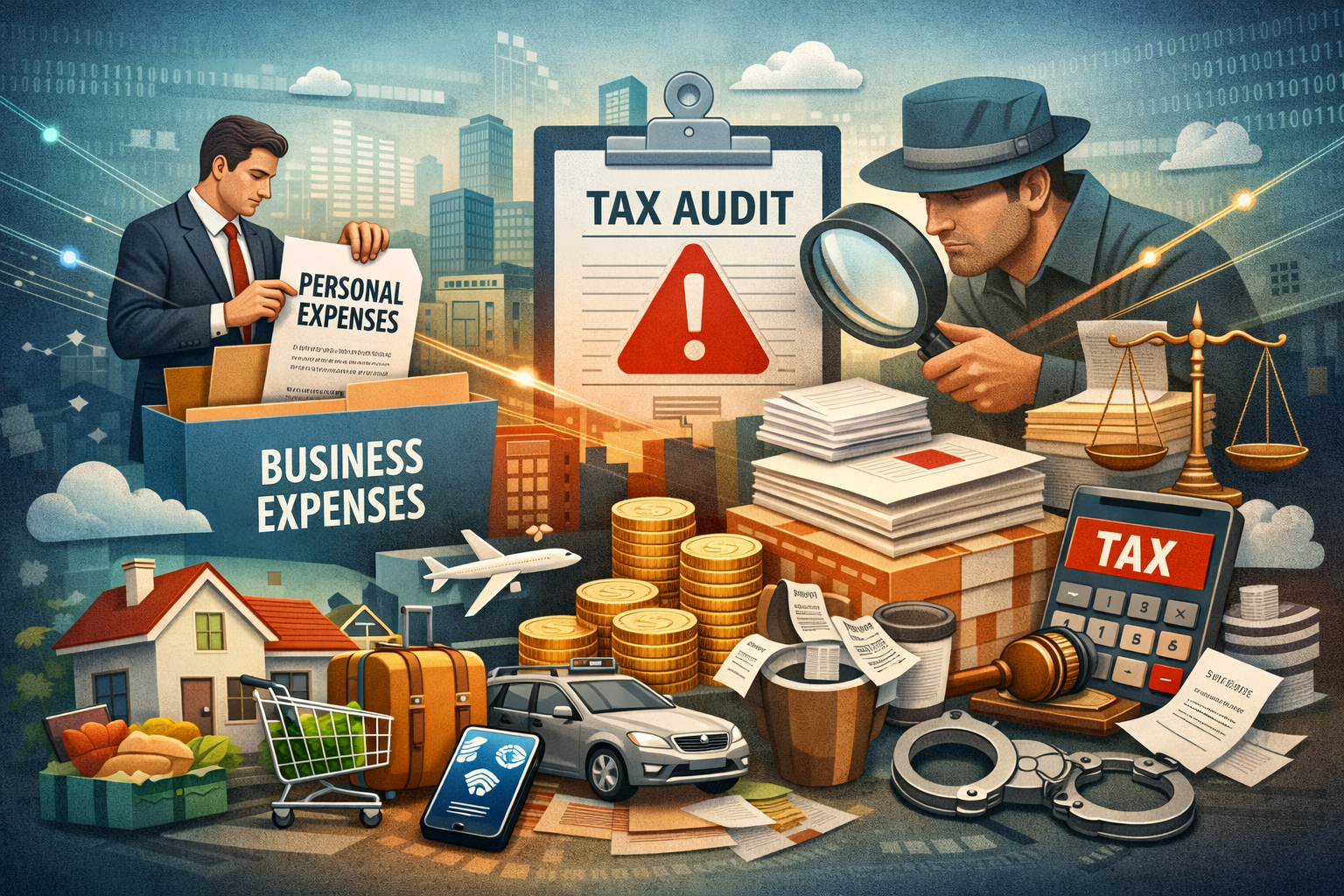
Typical personal expenses wrongly claimed as business expenses include:
- Household groceries shown as office expenses
- Personal mobile and internet bills claimed as business costs
- Family travel booked as business travel
- Personal vehicle expenses recorded as logistics
- Home utility bills shown as office expenses
- Personal medical, insurance, or education expenses routed through business accounts
Individually small, these expenses cumulatively distort financial statements.
Tax and Compliance Consequences
The immediate consequence is disallowance of expenses, leading to higher taxable income and additional tax liability.
Beyond tax adjustments, taxpayers may face:
- Interest liability from the original due date
- Penalties for under-reporting or inaccurate particulars
- Increased scrutiny and detailed examination of books
- Review of past years and expanded proceedings
Repeated disallowances also damage compliance history and credibility with tax authorities.
Business and Financial Impact
Improper expense claims distort profitability and weaken financial statements, resulting in:
- Poor business decisions
- Reduced loan eligibility
- Higher borrowing costs
- Lower credibility with lenders and investors
Financial discipline is therefore both a tax and governance issue.
No Safe Threshold for Personal Expenses
There is no legal exemption for small amounts. The principle applies irrespective of quantum, and reliance on discretion is unpredictable.
Prevention: The Right Approach
The most effective safeguard is strict separation of personal and business finances. This includes:
- Separate bank accounts and credit cards
- Clear expense policies
- Proper documentation and justification
- Reasonable allocation for mixed-use expenses
Professional review and timely correction of errors significantly reduce long-term risk.
Conclusion
Claiming personal expenses as business expenses is a silent but serious compliance risk. The perceived short-term benefit is far outweighed by the potential tax, financial, and reputational consequences.
In a technology-driven tax environment, transparency, documentation, and disciplined financial practices are essential. True tax efficiency lies not in aggressive claims, but in compliant, sustainable, and well-governed financial management.